The Half-Second Advantage: Why Streaming Lag Is Secretly Training Your Brain
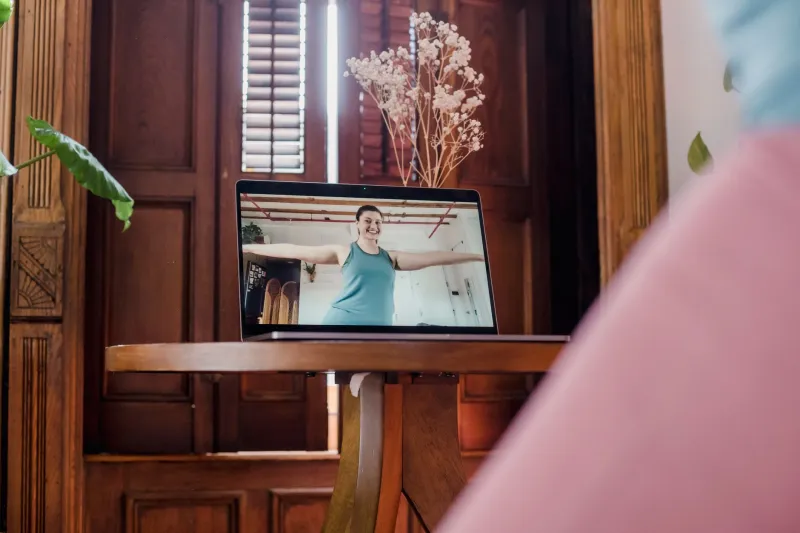
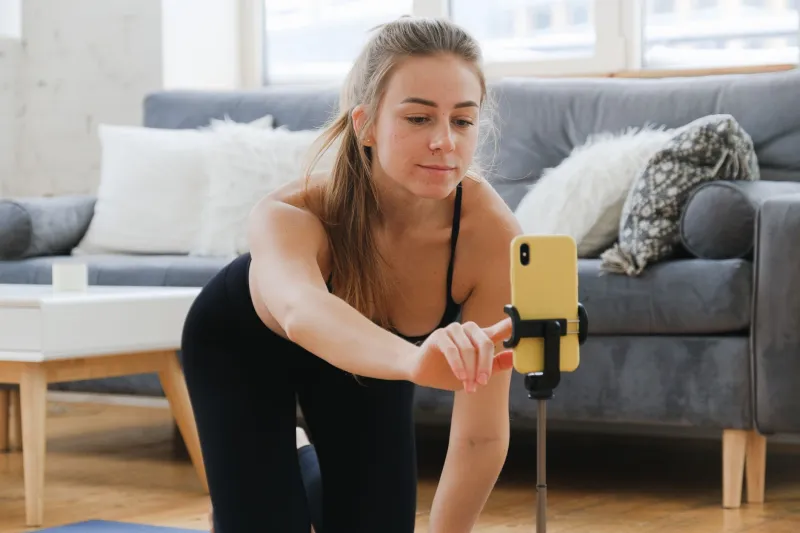
You've been in a live fitness class on Cellula Live, mid-squat, watching yourself in the corner of the screen — and there's that familiar ghost of a delay. Your body dips, and then a beat later, your reflection follows. It's annoying, right? You want the feedback to be instant. You want to see yourself move in real time.
But here's the thing: that lag might be one of the most underrated training tools in your entire workout.
Stay with us, because the neuroscience here is genuinely wild.
Your Nervous System Was Built for Delay
First, a quick reality check about how your body already works. Proprioception — your brain's internal GPS for where your limbs are in space — isn't actually instantaneous. Signals travel from your muscles and joints up through your spinal cord and into your brain at varying speeds, and the processing that follows takes time. When you catch yourself stumbling and correct your balance, that whole cascade happens in fractions of a second, but it's still a process, not a flash.
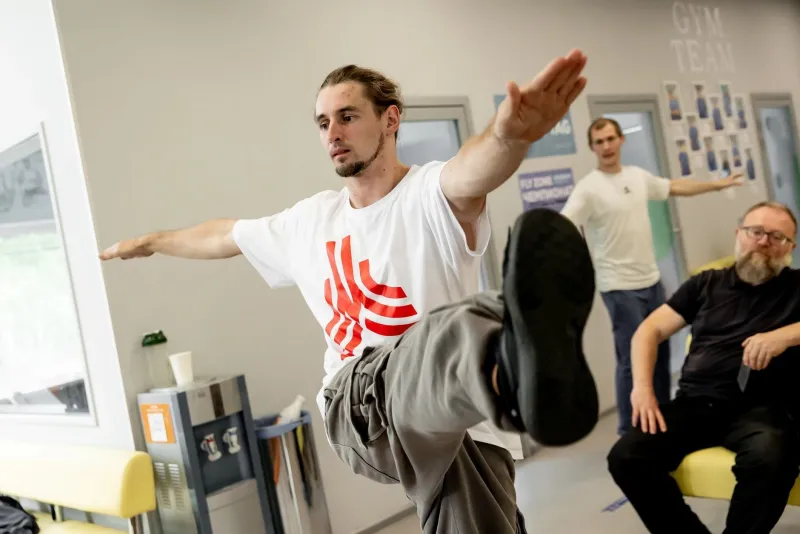
Elite coaches have known for decades that the best body awareness doesn't come from constant, immediate external feedback. It comes from training athletes to feel movement before they see or hear confirmation of it. Gymnastics coaches, for instance, routinely use blindfolded drills. Ballet instructors cover mirrors during certain phases of choreography. The reason is the same: when you strip away instant visual confirmation, your nervous system is forced to build its own internal map.
A slight streaming delay does something surprisingly similar.
What the Research Says About Lag and Learning
Motor learning — the science of how your brain acquires and refines physical skills — has been studying feedback delay for longer than live streaming has existed. A foundational concept in this field is the difference between concurrent feedback (seeing or feeling something as it happens) and terminal feedback (getting information after the fact).
For years, researchers assumed concurrent feedback was always superior. If you can see your form in real time, you'll correct it faster, right? But study after study has complicated that picture. A landmark series of experiments out of the University of Southern California found that learners who received slightly delayed feedback on their movement patterns actually retained skills better over time than those who got instant correction. The theory: when feedback is immediate, your brain outsources the monitoring job to the external cue. When there's a delay, your brain has to hold the movement in working memory, compare it to what it felt like internally, and do more of the analytical heavy lifting itself.
That's not a bug. That's resistance training for your motor cortex.
The Lag Loop: What's Actually Happening During That Delay
Here's a practical breakdown of what's going on inside your head during a live stream squat with a two-second delay:
- You initiate the movement. Your motor cortex fires, your muscles engage, and proprioceptive signals start flooding back to your brain.
- You feel the squat. Before you see anything on screen, your body is already processing depth, knee alignment, weight distribution, and balance.
- The delay window opens. For roughly one to two seconds, you're operating on pure internal feedback. This is the zone where your nervous system is doing its most honest work.
- The visual confirmation arrives. Now your brain compares what it felt to what it sees. Discrepancies get flagged. Corrections get encoded.
That comparison step — feeling versus seeing — is where genuine proprioceptive improvement happens. It's the same mechanism that makes video review so powerful for professional athletes. The delay forces a moment of internal assessment that instant feedback skips entirely.
Elite Athletes Are Already Using This
This isn't purely theoretical. Strength and conditioning coaches working with high-level athletes have started incorporating what some call "feedback buffering" into their programming. Instead of giving athletes immediate video playback of a lift, they show the footage 30 to 60 seconds later. The athlete has to verbally describe what they felt during the movement before seeing the replay. Then they compare.
The results are striking. Athletes who go through this process consistently develop sharper self-assessment skills and make form corrections faster in competition settings — where, of course, there's no coach standing next to them with a tablet.
Live streaming lag, particularly in platforms like Cellula Live where the real-time mirror view has that characteristic slight buffer, creates a low-key version of this same loop. You're not just watching yourself work out. You're being forced to feel first and see second. Every rep.
Practical Ways to Lean Into the Delay
If you want to actually use this instead of just tolerating it, here are a few approaches worth trying during your next live session:
Don't chase the screen. Resist the urge to constantly glance at your video feed for reassurance. Let yourself feel a full movement before checking your form on camera. You're training your internal sense, not performing for an audience.
Call the shot before you see it. Before the delayed image catches up, mentally note what you think your form looked like. Was your back flat? Were your knees tracking correctly? Then compare when the visual arrives. You'll get faster at self-diagnosis over time.
Use the lag as a mindfulness cue. That half-second gap is a built-in pause for body awareness. Treat it like a micro check-in rather than a technical glitch. Some athletes even find it helps them stay present during longer cardio sessions.
Work with your trainer, not just your mirror. Live instructors on platforms like Cellula Live can call out corrections in real time even when your visual feedback is delayed. Let their verbal cues be your primary guide and use the video as secondary confirmation.
Rethinking "Perfect" Feedback
There's a broader lesson buried in all of this. American fitness culture has become obsessed with optimization — the best tracking, the most accurate metrics, the fastest feedback loops. We want our smartwatches to vibrate the millisecond our heart rate spikes. We want form correction before we've even finished the rep.
But the body doesn't actually learn best under those conditions. It learns best when it has to work a little. When it has to guess, compare, and recalibrate. The slight imperfection of a live stream — the lag that engineers are constantly trying to eliminate — might be one of the most human-scale training stimuli we've accidentally built into digital fitness.
Next time your stream buffers for a beat, don't reach for the settings menu. Reach inward instead. Your nervous system is already doing the work.
Want to experience real-time fitness classes where your body does the thinking? Explore live training sessions on Cellula Live and stream your healthiest life — delay and all.