Doctors Are Walking Away From Their Practices — And Rebuilding Them Live Online
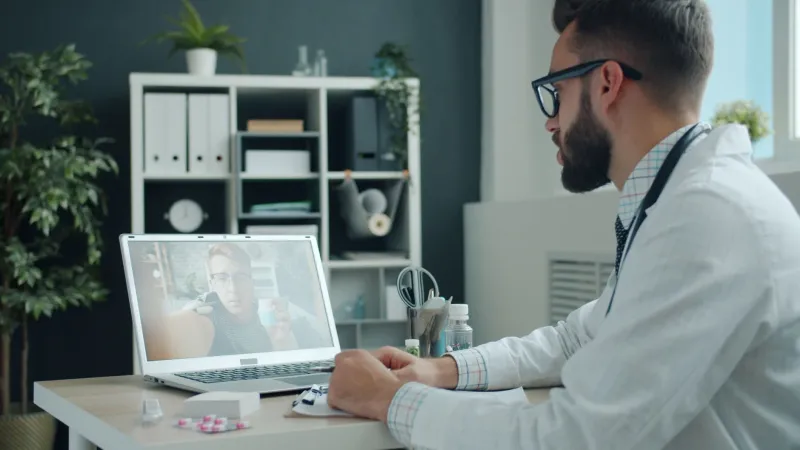
Dr. Alicia Voss spent seventeen years building a cardiology practice in suburban Ohio. She was good at the medicine. She was drowning in everything else — prior authorizations that ate entire afternoons, EHR documentation that stretched her workdays past 10 PM, insurance disputes that had nothing to do with whether her patients were getting better. Last year, she closed her practice. Six months later, she was back — this time doing live cardiology consultations through a digital health platform, on her own schedule, with none of the administrative machinery that had been slowly crushing her.
"I went from spending maybe 35 percent of my day actually talking to patients to spending close to 90 percent," she said. "That's why I went to medical school."
Her story isn't an outlier anymore.
The Burnout Numbers Are Bad, and Getting Worse
American medicine has a retention crisis that the industry has largely failed to solve through conventional means. A 2023 survey from the American Medical Association found that more than half of U.S. physicians reported at least one symptom of burnout — emotional exhaustion, depersonalization, or a reduced sense of personal accomplishment. Primary care physicians and specialists working in high-volume hospital systems reported the highest rates.
The causes are well-documented: administrative overload, productivity quotas, documentation burdens, and the grinding emotional weight of navigating a system that often seems designed around billing efficiency rather than patient outcomes. For many physicians, the math eventually stops working. They leave hospital systems. Some retire early. Some leave medicine entirely.
But a growing number are finding a third path — and live streaming healthcare is increasingly that path.
What Live Streaming Removes From the Equation
To understand why burned-out physicians are gravitating toward live health platforms, you have to understand what those platforms don't have.
No front desk staff managing scheduling chaos. No insurance credentialing labyrinth. No prior authorization phone trees. No EHR system that was designed by committee and optimized for billing codes rather than clinical workflow. No mandatory productivity metrics measuring how many patients per hour a doctor can process before quality of care starts to erode.
What live streaming healthcare platforms offer instead is a stripped-down version of the job doctors actually signed up for: a patient, a problem, and the expertise to help. Consultations happen in real time. Documentation is lighter. The scheduling is often physician-controlled. And because many of these platforms operate outside the traditional insurance reimbursement model — using direct-pay or subscription structures — the financial middleman that generates so much administrative friction is either dramatically reduced or removed entirely.
For physicians who have spent years feeling like they're practicing medicine around a system rather than within one, that simplicity is genuinely compelling.
The Specialist Access Problem Gets Interesting Here
There's a second story running underneath the physician burnout narrative, and it matters enormously for patients — particularly those in rural and underserved communities across the U.S.
America has a specialist shortage that's quietly devastating for people who don't live near major metropolitan areas. According to the Health Resources and Services Administration, more than 80 million Americans live in areas designated as having a shortage of primary care providers. Specialist access is often far worse. Waiting months to see a rheumatologist, neurologist, or endocrinologist is a routine reality for patients in rural Mississippi, western Kansas, or the rural stretches of Appalachia.
When burned-out specialists exit traditional practice and migrate to live streaming platforms, something unexpected happens: their geographic reach expands dramatically. A cardiologist who previously served patients within a 30-mile radius of her Ohio office is now, in theory, accessible to a patient in rural Alabama who has been waiting four months for a specialist appointment.
Platforms like Cellula Live, which offer real-time specialist consultations as part of their live health programming, are actively creating these connections. The physician gets a more sustainable practice model. The patient in a medically underserved area gets access to expertise that was previously logistically and financially out of reach. It's not a perfect system — licensure complications across state lines remain a real regulatory friction point — but the direction of travel is clear.
Is the Quality of Care Actually Holding Up?
Fair question, and worth asking directly. Critics of virtual-first healthcare have long raised concerns about whether real-time digital consultations can match the diagnostic quality of in-person care. For some specialties and conditions, that concern is legitimate — a physical exam matters, and no screen can replicate it.
But for a substantial portion of specialist consultations, the in-person requirement is less about clinical necessity and more about how the system was built before broadband existed. Medication management, follow-up care, interpretation of lab and imaging results, second opinions, chronic disease monitoring — a significant share of specialist work translates well to live video consultation, and research increasingly reflects that.
A 2022 review in the Journal of Telemedicine and Telecare found patient satisfaction rates for virtual specialist consultations comparable to in-person visits across multiple specialties, with no significant difference in diagnostic accuracy for conditions where physical examination wasn't the primary diagnostic tool. The caveat matters — this isn't a blanket endorsement of replacing all in-person care. But it does suggest that the quality concerns, while real in specific contexts, are being overstated as a general objection.
For a physician who has rebuilt their practice around live streaming, the ability to actually focus on the patient — without charting during the appointment, without racing to the next room, without the background noise of a system optimized for throughput — may itself be a quality-of-care variable that doesn't show up cleanly in the research but is felt acutely by the patients on the other end of the call.
What This Means If You're the Patient
If you're currently navigating a long wait for a specialist, struggling to access care in a rural or underserved area, or simply frustrated by how little face time you actually get with your doctor during a traditional appointment, the migration of physicians toward live health platforms is genuinely good news.
It won't solve everything. The regulatory framework around interstate telehealth licensure is still catching up to where the technology already is. Insurance coverage for live virtual consultations remains inconsistent. And not every medical situation is appropriate for a digital-first approach.
But a system that retains skilled, experienced physicians who were otherwise heading for the exit — and routes their expertise toward patients who couldn't access it before — is a meaningfully better system than the one we had.
The doctors are streaming. For a lot of Americans, it's the first time a specialist has ever been this easy to reach.